

God’s Wrath: J. Bridges
Many would avoid the topic of God’s anger against sin and talk only of his love. The wise know better. It is a very loving thing to remind people of all that Scripture teaches, including God’s hatred of sin.
- ‘God‘s wrath arises from his intense, settled hatred of all sin and is the tangible expression of His inflexible determination to punish it.’
-Jerry Bridges, Holiness Day by Day, Week 12 / Wednesday
(GSiV: Hồn của những người chưa được cứu thì bị cho đi Địa Ngục (Hell); Missions and Evangelism;
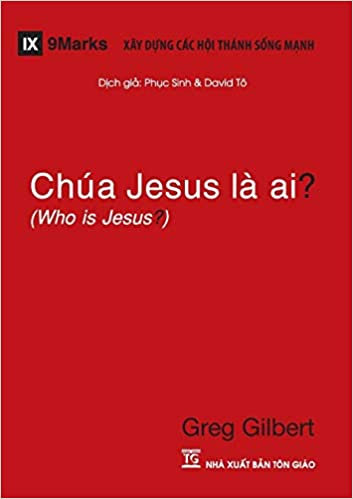
Chúa Jesus Là Ai? của Ông Gilbert
Chúa Jesus là ai?
Bạn Nghĩ Gì?
‘Bạn nghĩ về Chúa Jesus là ai?
‘Có lẽ bạn chưa bao giờ thực sự suy nghĩ nhiều về câu hỏi này. Theo một nghĩa nào đó thì điều này cũng dễ hiểu thôi. Xét cho cùng, chúng ta đang nói về một người được sinh ra trong thế kỷ thứ nhất trong một gia đình thợ mộc người Do Thái. Ngài không đứng đầu một đảng phái chính trị, không cai trị bất kỳ quốc gia nào, không chỉ hủy bất kỳ đội quân nào. Ngài thậm chí còn chưa bao giờ gặp một hoàng đế La Mã. Thay vào đó, trong ba năm rưỡi, người đàn ông này chỉ đơn giản là dạy dỗ mọi người về đạo đức và tâm linh, Ngài đọc và giải thích Kinh Thánh Do Thái cho người Do Thái, và nếu những nhân chứng về Ngài đáng tin, thì Ngài cũng đã làm một số việc khá là phi thường. Nhưng rồi, Chúa Jesus cũng phải chịu sự cai trị bất công của bậc cầm quyền trong thời của mình, và không lâu sau khi Ngài bắt đầu chức vụ công khai của mình, Ngài bị đóng đinh trên thập tự giá bởi một trong những thống đốc La Mã–một viên quan cáp cao có quyền lực thực sự.
‘Trên hết, tất cả những điều này đã xây ra khoảng hai nghìn năm trước đây. Vậy tại sao chúng ta vẫn nói về Ngài? Tại sao chúng ta luôn bắt gặp nhân vật Jesus này?’
-Greg Gilbert, Chúa Jesus Là Ai?, Viet version 2019), tr. 10.
(GSiV: Phúc Âm Là Gì?)
Inerrancy and Missions
- Missionaries can’t distinguish Christianity without an inerrant Bible.
- Missionaries can’t establish and maintain healthy churches without an inerrant Bible.
- Missionaries can’t train indigenous pastors without an inerrant Bible.
- ‘Evangelical inerrantists have labored for decades to uphold the simple axiom that Scripture is entirely true and without any formal error or contradiction. But here’s the stark reality for us as we consider the task of the Great Commission: If we lose inerrancy, we lose global missions. How can I make such a statement? Consider these three reasons.’
- ‘Without inerrancy, the Bible is all diversity and no unity, and the idea of a cogent systematic theology becomes elusive if not impossible.’
- ‘The Bible is breathed out by our holy God (2 Tim. 3:16), and therefore true (Ps. 19:9; Prov. 30:5), pure (Pss. 12:6; 19:8), complete (Deut. 4:2; 12:32; Prov. 30:6; Rev. 22:18–19), perfect (Ps. 19:7a), sure (Ps. 19:7b), enduring (Isa. 40:8; Matt. 5:18; Luke 16:17), and trustworthy (2 Pet. 1:19).’
–Derek J. Brown
Read the whole article here
(GSiV: Missions and Evangelism;
“Thế Nào Là Một Hội Thánh Khỏe Mạnh?” 9Marks–Part 5
“What is a Healthy Church?”
Chương 5: Dấu Hiệu Thiết Yếu Của Hội Thánh Khỏe Mạnh: Giảng Giải Kinh
‘Nếu một Hội thánh khỏe mạnh là một hội chúng ngày càng bày tỏ bản tánh của Đức Chúa Trời là bản tánh được bày tỏ trong lời của Ngài, chỗ hiển nhiên nhất để bắt đầu việc xây dựng một Hội thánh khỏe mạnh là phải kêu gọi các Cơ Đốc nhân lắng nghe Lời Đức Chúa Trời. Lời của Chúa là nguồn của mọi sự sống và sức khỏe. Đó là thứ để nuôi dưỡng, phát triển, và bảo tồn sự hiểu biết về Phúc âm của chính Hội thánh.’
-Mark Dever
Hãy đọc thêm
(GSiV: Ân điển, chứ không phải những quy tắc / Grace not rules; Unity)
Cross-cultural ministry and hardship
‘Gospel work, especially when it is compounded with the wear and tear of cross-cultural ministry in a hostile context, is accomplished because of hard things not despite them. For example, learning a new language and a new script is hard work. There’s nothing glamorous after months of study and practice to finally speak on the level of a local toddler!’
-Tim Keesee
Read the whole thing here
(GSiV: Missions and Evangelism, Missionaries and Difficult Plodding, “Success” and Missions: G. Aylward, Miller: Success, Failure, and Grace, Suffering in vocational ministry)
Missionaries and Difficult Plodding
“A missionary plods through the first year or two, thinking that things will be different when he speaks the language. He is baffled to find, frequently, that they are not. He is stripped of all that may be called ‘romance.’ Life has fallen more or less into a pattern. Day follows day in unbroken succession; there are no crises, no mass conversions, sometimes not even one or two to whom he can point and say: ‘There is a transformed life. If I had not come, he would never have known Christ.’ There will be those among the Indians [or whichever people group] who say that they accept Christ, but what of the forsaking of heathen custom and turning from sin to a life of holiness? The missionary watches, and longs, and his heart sickens.
“The forces of evil, unchallenged for so long, are now set in array against the missionary.”
-Elisabeth Elliot, Through Gates of Splendor, 40th anniversary ed. pp. 151-152
(GSiV: Missions and Evangelism, “Success” and Missions: G. Aylward, Miller: Success, Failure, and Grace, Suffering in vocational ministry)
“Success” and Missions: G. Aylward
What would the Baptist missionary Gladys Aylward (1902-1970) teach us about biblical missions?
- ‘As an adult, Aylward stood less than 5 feet tall in her ragged clothes, and she had little formal education. This small woman looked unlikely to make much of a difference in the world. According to her credentials, it was doubtful she would affect thousands with the gospel of Jesus Christ.
- ‘When our lives feel stagnant and ordinary, Aylward’s life can encourage us. God uses the weak—not the strong—so that no flesh should glory in his presence (1 Cor. 1:27–31). Aylward didn’t set out to become a well-known missionary. She didn’t expect to be a world-changer. She simply set her face on Christ, then toward China. God accomplished the rest.’
- ‘Our plans may fail. Aylward’s mentors insisted she join a missionary society, enroll in their college, and be sent to the mission field under their care. The missionary society committee, however, found her unfit in terms of education and intellect. They rejected her and told her the Chinese language would be far too difficult for her to learn. With her rejection by the missionary society, Aylward’s dream seemed impossible.’
- ‘God’s plans won’t fail. Aylward’s initial plan to get to China may have failed, but God’s plan to use her there succeeded. She put her hope in his sovereign plan, knowing whatever he willed would succeed. She trusted that this was the way God would be most glorified.’
- ‘…Aylward’s story encourages us that even our failures lead to success–when we define success as God does.’
- ‘…despite her weaknesses.’
Read the whole thing here
(GSiV: Missions and Evangelism, Miller: Success, Failure, and Grace, Suffering in vocational ministry)
When are Church-planting pastors most dangerous?
‘In 1 Corinthians 3:5–9, Paul explains that while he planted and Apollos watered, God gave increase to the church. Paul and Apollos were merely servants through whom the Corinthians believed. They were not owners who could claim credit for the growth; they were stewards whom God graciously used to accomplish his purposes.
‘If church history has taught us anything, it is this: Church-planting pastors are most dangerous to their flock when they act as owners—men who view God’s people as their possession, to serve their selfish interests—rather than as servants seeking the good of the church and the glory of Christ.
‘One practical way church planters can guard against acting like owners is by proactively seeking and welcoming accountability. A pastor who refuses to live as a man under authority is more likely to feed his selfish desires to the demise of his flock.
‘Are your fellow elders empowered and encouraged to address sin in your life? Have you surrounded yourself with “yes men,” or do your elders consistently challenge you? Are you open to constructive criticism from your flock? Or have you created a culture of fear and intimidation that encourages them to keep their concerns to themselves?’
-Phillip Holmes
Read the whole thing here
(GSiV: Starting churches; Unity; Prayer; Ân Điển của Phúc Âm ;







 QUYỀN NĂNG CAO CẢ CỦA ĐỨC CHÚA TRỜI Ở VIỆT NAM (Ê-phê 1:4-5)