
Đức Chúa Trời và Sự Cứu Rỗi–15
‘Đây không đơn thuần là một hệ thống của con người. Đó là một cái nhìn theo Kinh thánh để thấy cánh tay của Đức Chúa Trời trong sự cứu rỗi như chúng tôi sẽ trình bày. Nhưng trước tiên là điều tốt để được nghe từ các tín hữu đáng kính là những người đã đi theo năm điểm của học thuyết Calvin. James I. Packer, một người Anh Giáo bảo thủ đã nói: “học thuyết Calvin … chỉ là phúc âm Kinh thánh” (Quest, p. 134). Spurgeon đã nói như thế này: “Thuyết Thanh Giáo, thuyết Tin Lành, thuyết Calvin [chỉ đơn giản là] những danh xưng khiêm tốn mà thế gian đặt cho đức tin vinh hiển và vĩ đại của chúng ta–Tín điều của sứ đồ Phao-lô, phúc âm của Chúa và Chúa Cứu Thế Giê-xu chúng ta” (Piper sermon, “Spurgeon,” quoting An All Round Ministry, p. 160).’
SOME ENGLISH:
’This is not merely a man-made system. It is a biblical way of seeing God’s hand in salvation as we shall show. But first it will be good to hear from other respected believers who have embraced the five points of Calvinism….’
– Đoạn 17, GSiV: Xem chi tiết
Đức Chúa Trời và Sự Cứu Rỗi–14
‘Thêm những nhận định khách quan, thuyết Calvin liên quan đến sự cứu rỗi được biết qua nhóm chữ cái đầu của từ, TULIP:
- T (Total Depravity) Tuyệt Đối băng hoại: Từng khía cạnh trong con người (VD: tâm trí, ý muốn, linh hồn, vv) bị bại hoại bởi ảnh hưởng của tội lỗi. Con người vô cùng xấu xa, hoàn toàn băng hoại, và chết trong tội lỗi mình, vì vậy con người cần sự sống từ Đức Chúa Trời.
- U (Unconditional Election) Được chọn vô điều kiện: Trong cõi đời đời Đức Chúa Trời chọn những người Ngài sẽ cứu, không dựa vào phẩm hạnh của họ hay bất kỳ công đức nào họ làm hay đức tin mà họ có nhưng dựa trên ý muốn tốt lành của Ngài.
- L (Limited Atonement) Sự chuộc tội có giới hạn: Chúa Cứu Thế chỉ chết chuộc tội cho những người đã được chọn.
- I (Irresistable Grace) Ân điển không thể cưỡng lại: Những người Đức Chúa Trời đã chọn sẽ tin thì được cứu.
- P (Perseverance of the Saints) Sự kiên trì của các thánh đồ: Các Cơ đốc nhân sẽ tiếp tục đức tin của mình. Họ sẽ không mất sự cứu rỗi.’
SOME ENGLISH:
‘More objectively stated, Calvinism as it relates to salvation is known by its acronym, TULIP:
- Total Depravity: every aspect of mankind’s being (e.g., mind, will, soul, etc.) is tainted by sin’s effects. Man is not as bad as he could be, but is nonetheless thoroughly sinful, and therefore, dead in his sin and needing life from God….’
– Đoạn 16, GSiV: Xem chi tiết
Phúc Âm Là Gì? Một Vài Tài Liệu (Tiếng Việt)
WHAT IS THE GOSPEL? A FEW RESOURCES IN VIETNAMESE
1) MỘT SỐ PHIM PHÚC ÂM (BẰNG TIẾNG VIỆT)
a. “TIN-LÀNH THEO LU-CA,” LumoProject, Nhiều tập (Gospel of Luke, in short video clips) xem
b. “PHIM CUỘC ĐỜI CHÚA GIÊ-XU,” (The JESUS film) xem
c. “TỪ BUỔI SÁNG THẾ ĐẾN CHÚA CỨU THẾ,” (Creation to Christ, cartoon/hoạt hình) xem
d. DỰ ÁN KINH THÁNH, The Bible Project, Nhiều tài liệu (Many video resources) xem
e. “NGUỒN HY VỌNG,” (The source of hope) xem
f. “2 CÁCH SỐNG,” Two ways to live, (In a short video with drawings) xem
2) MỘT SỐ TIỂU LUẬN PHÚC ÂM (BẰNG TIẾNG VIỆT)
a. “CÂU CHUYỆN LỚN KINH THÁNH” / The Bible’s Big Story đọc
- ChristCenteredResourcesAsia.com
b. “HAI LỐI ĐI, MỘT ĐƯỜNG VỀ” đọc hay nghe
- Grace Community Church/Sun Valley, CA–USA
c. “TIN LÀNH CỦA CHÚA GIÊ-SU” đọc
- HeartCry/Virginia–USA
d. “PHÚC ÂM TRONG 6 PHÚT” đọc
- Desiring God/Minnesota–USA
e. “TRUYỀN GIÁO VÀ PHÚC ÂM” đọc
- 9Marks/Washington DC–USA
f. “CLARITY ON THE GOSPEL: WHY JESUS CAME” (bằng tiếng Việt và tiếng Anh) đoc
- GSiV
(GSiV: Những Tài Liệu)
God’s Part and Man’s Part in Salvation
Here’s an outline to a helpful article that clearly explains the doctrines of sovereign grace:
‘God and man must both do something before a man can be saved….
ONE
1). ‘A man must repent and believe in order to be saved. No one was ever forgiven and made a child of God who did not willingly turn from sin to Christ….
TWO
2). ‘Every one who repents and believes the gospel will be saved….
THREE
3). ‘Repentance and faith are not vicarious but are the free acts of men. Men, with their own mind, heart, and will must renounce sin and receive Christ. God doesn’t repent and believe for us–we repent and believe….
‘… We have neither proven freewill nor disproved election, since it is impossible to do either….
FOUR
4). ‘The same Bible that states man must repent and believe in order to be saved, also emphatically states that man, because of his sinful nature, is totally unable to repent and believe….
‘To believe and preach points One, Two, and Three, without also preaching number Four is to grossly misrepresent the gospel of God’s grace. It is to give a totally false picture of the sinner and his true need. It shows only half of the man’s sin….
‘Please note a few texts of Scripture that dogmatically state some things that a lost man cannot do:
- ‘Man cannot see-until he first be born again. (John 3:3)
- ‘Man cannot understand-until he first be given a new nature. (I Cor. 2:14)
- ‘Man cannot come-until he first be effectually called by the Holy Spirit. (John 6:44-45)
‘We do not have space to go into all the “cannots,” but these three are sufficient to show that a sinner absolutely cannot…come to Christ until God first does something in that sinner’s nature. That “something” is what the Bible calls regeneration, or the new birth, and it is the exclusive work of God the Holy Spirit. Man has no part whatever in regeneration.
FIVE
5). ‘The new birth, or regeneration, is God giving us the spiritual life that enables us to do what we must do (repent and believe), but CANNOT DO because of our bondage to sin…. We indeed need Christ to die and pay the penalty of our sin, but we just as desperately need the Holy Spirit to give us a new nature in regeneration….
‘God is a triune God…. No man can declare the “glorious gospel of grace” and leave out the Father’s sovereign electing love and the Holy Spirit’s regenerating power as essential parts of God’s work in saving sinners…. How dreadful, and ridiculous, to give Christ the glory for His work on the cross, and then give sinners the credit for the Father’s work in eternity (election) and the Spirit’s work in our hearts (regeneration)….
‘The root error of the Arminian’s gospel of freewill is its failure to see that man’s part, repentance and faith, are the fruits and effects of God’s work and not the essential ingredient’s supplied by the sinner as “man’s part of the deal…”.
SIX
6). ‘The Scriptures clearly show that faith and repentance are the evidences and not the cause of regeneration…. Just so when a spiritually dead man begins to perform spiritual acts such as repentance and faith-these spiritual “fruits” show that the miracle of the new birth has taken place….
‘… Acts 16:14 is a clear proof of the above…. Arminianism insists that man’s free will must furnish the willingness or power, and the Bible says that the Holy Spirit of God furnishes that power or ability in the new birth….
‘The necessity of the Holy Spirit’s work being thus theologically denied, it will not be long before it is ignored in actual practice. This is the plight of modern day evangelism….’
-John G. Reisinger
(Đoạn 42, GSiV: Ý chí tự do của con người, Xem chi tiết)
(Also see GSiV here)
‘Sự Lựa Chọn’ Là Gì?—Part 1
What is ‘election’?
‘Ý nghĩa của sự lựa chọn đối với người tin Chúa
‘Phao-lô tìm thấy trong sự nhận thức của tín hữu về sự chọn lựa của mình một ý nghĩa tôn giáo có ba điểm sau:
‘a. Điều này bày tỏ cho tín hữu thấy rằng sự cứu rỗi của mình, từ đầu đến cuối, đều thuộc về Đức Chúa Trời, một kết quả của ơn thương xót thần hựu đặc biệt. Sự cứu chuộc mà người tìm thấy chỉ trong Đấng Christ và nhận được chỉ bởi đức tin, không bắt nguồn từ một phẩm cách cá nhân nào, nhưng chỉ bởi ân điển – ân điển của sự chọn lựa. Mọi phước hạnh thuộc linh tuôn tràn trên người đều đến từ ý định lựa chọn của Đức Chúa Trời (Êph 1:3tt.). Do đó, nhận thức về sự lựa chọn của mình sẽ dạy người ấy làm vinh hiển Đức Chúa Trời, và chỉ một mình Đức Chúa Trời mà thôi (1Cô 1:31), và dâng cho Ngài sự ngợi khen mà Ngài đáng được nhận (Rô 11:36). Cuối cùng của sự chọn lựa đó là Đức Chúa Trời được ngợi khen (Êph 1:6, 12, 14), và ý tưởng về sự lựa chọn phải hướng tội nhân được chuộc đến sự ngợi khen và cảm tạ không thôi, như Phao-lô đã làm (Rô 11:33tt.; Êph 1:3tt.; 1Tê 11:3tt.; 2Tê 2:13tt.). Điều mà Đức Chúa Trời đã bày tỏ về sự lựa chọn cho Phao-lô là một chủ đề, không phải là một lý luận, dành cho sự thờ phượng.’ -J. I. Packer
-New Bible Dictionary, I. H. Marshall, J. I. Packer, et.al. (Intervarsity) / Thánh Kinh Tân Từ Điển (UUC: 2009, tr. 1055)
(Tại GSiV: Xem Chi Tiết)
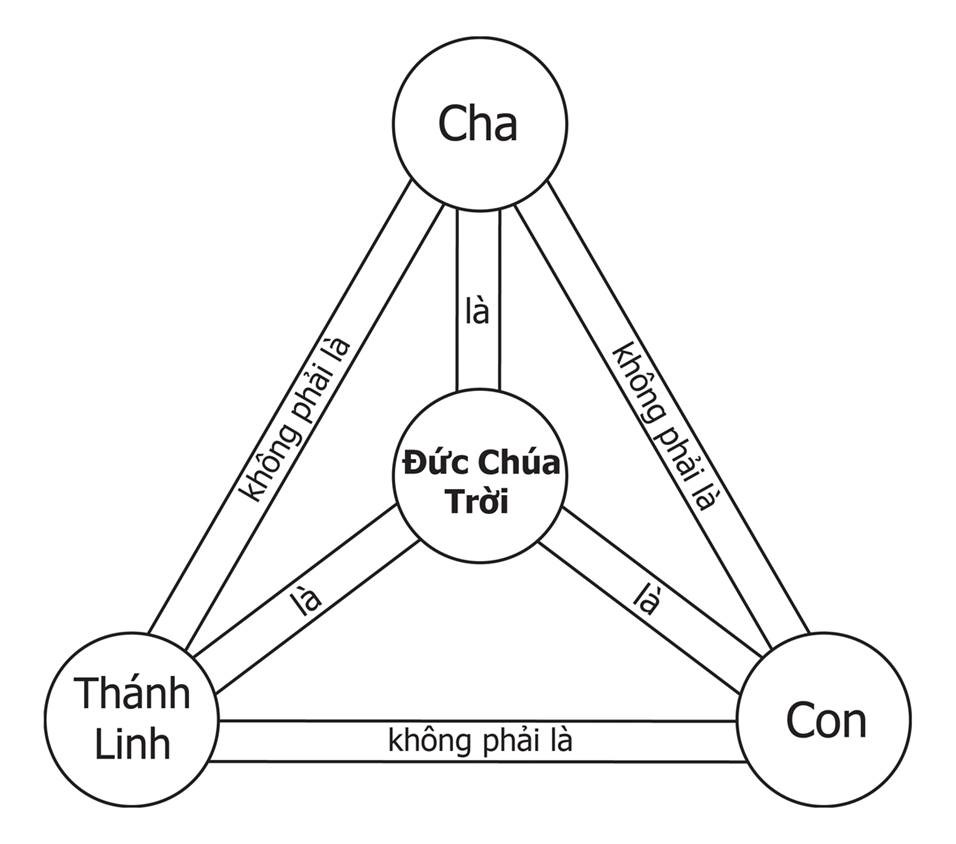
Ba Ngôi Đức Chúa Trời (Trinity)—part 4
Vietnamese Theological Review has some helpful posts. Here’s an excerpt about the Trinity:
Question: ‘I hear people say that Protestants say that there is only one God but there is a Trinity. I really don’t understand. Please explain for me. Thank you.’
‘Tôi nghe những người Tin Lành nói rằng chỉ có Một Đức Chúa Trời nhưng có Ba Ngôi: Đức Chúa Cha, Đức Chúa Con và Đức Thánh Linh, tôi thật sự không hiểu. Xin vui lòng giải thích giùm tôi. Xin cảm ơn.’
Answer: ‘Cảm ơn Chúa cho Bạn thính giả đã có câu hỏi thuộc vào loại khó nhất trong các lẽ đạo của người Tin Lành. Quả đúng như vậy, theo sự mặc khải của Đức Chúa Trời trong Kinh thánh, Đức Chúa Trời mà người Tin Lành tin và thờ phượng là Đức Chúa Trời có Ba Ngôi nhưng Hiệp Một, đồng đẳng, đồng quyền, đồng thể yếu, bất phân ly. Nói tóm một lời là Ba Mà Là Một, Một Mà Là Ba!
‘I. Tôi xin nói về TẦM QUAN TRỌNG CỦA LẼ ĐẠO ĐỨC CHÚA TRỜI BA NGÔI:
‘Sở dĩ tôi nói đây là câu hỏi thuộc loại khó nhất trong các lẽ đạo là như câu nói của nhà Thần học…
‘1. Nếu không tin Đức Chúa Trời Ba Ngôi thì mất sự cứu rỗi….
‘2. Nếu càng cố cậy khôn ngoan loài người để giải thích Đức Chúa Trời Ba Ngôi thì mất linh hồn….’
Teaching about Predestination
If you believe in predestination, and you should, then you should talk about it with Christians and encourage them to believe it too. Here’s one author’s helpful suggestions from an experience with high school students.
- ‘1. I highlighted that this side of heaven, there are going to be some things we simply don’t fully understand about God….
- ‘2. I also spent time talking about the truth (seen throughout the book of Romans) that makes it abundantly clear that God’s choosing me has absolutely nothing to do with me deserving to be chosen. We talked about the fact that if God chooses me, it is actually in spite of the fact that I deserve to go to hell.
- ‘3. We then talked about how amazing it is that God, in eternity past (even before creation), spent time thinking about me – choosing me….’
The author made another good point: ‘It also makes for a really hopeful discussion in Senior High Sunday School class where students don’t feel like they need to apologize for their God’s sovereign decisions.’
Teaching about salvation minus Calvinism?
“A soteriology [doctrine of salvation] without Calvinism
is a path to bad religion and compromised churches.”
Tom Nettles
Also see
Đoạn 52, GSiV:
“Tránh tranh luận và chỉ giảng Kinh Thánh”
Đức Chúa Trời và Sự Cứu Rỗi–12
Tín lý về ân điển quyền năng
‘Tín lý về ân điển quyền năng, hay thuyết Calvin căn bản là về sự vĩ đại và uy nghi của Đức Chúa Trời. Điều quan trọng nhất của con người là làm vinh hiển Đức Chúa Trời và tận hưởng Ngài mãi mãi, như Tín Điều Trích lượt Westminster nói đến. Thuyết Calvin đặc biệt liên quan đến sự thảo luận của chúng ta theo hướng này–Đức Chúa Trời là vĩ đại và đáng được ngợi khen. Ngài là Đấng quyền năng và là món quà vĩ đại nhất mà Ngài có thể ban cho người khác. Ngài sẽ không dừng lại để bênh vực cho mình qua sự chết và sự phục sinh của ngôi hai trong ba ngôi Đức Chúa Trời, Chúa Giê-xu-Thần Nhân.’
- The doctrines of sovereign grace
‘The doctrines of sovereign grace, or Calvinism, are primarily about the greatness and magnificence of God. The chief end of man is to glorify God and enjoy him forever, as the Westminster Shorter Catechism says….’
– Đoạn 10, GSiV: Xem chi tiết
Calvin on Election and Predestination–Part 3
What did the great theologian Jean (John) Calvin actually say about these doctrines? Below is one teacher’s wrong teachings about Calvin’s theology.
‘Predestination: Calvin believed that God made faith available as a gift to every person. It was the will of God that every person would accept Jesus as Savior by faith. However, God also knew that not everyone would receive Jesus and be saved. (Rom. 8:29-30; Eph. 1:5; 1:11)
‘He used numerous scriptures to teach his doctrine of predestination.
‘Calvin’s followers: After several years his followers began to take Calvin’s teaching about predestination to the extreme.
- ‘One group said that “predestination” means exactly what Calvin taught, that God willed in advance that all people can have faith and can believe in Christ, however not all men will believe and be saved.
- ‘A second group taught that God willed for certain people to be saved and some to be lost. They also used scriptures to prove this. They believed that people who are “predestined” to be saved will not be able to deny Christ. They will accept Jesus and be saved. God has willed that some people will not accept Jesus. No matter what they do, they will never accept Jesus and be saved. This position actually was adopted by most Calvinists and became official Calvinism even though Calvin did not teach this.
‘Many different groups of churches adopted one or the other of these positions.’
Dưới đây là đánh giá sai của một thầy về thần học của Calvin
‘Sự tiền định: Calvin tin rằng Đức Chúa Trời dành sẵn đức tin cho chúng ta như là tặng phẩm Ngài dành cho mọi người. Ý muốn Đức Chúa Trời là mỗi người phải tiếp nhận Chúa Giê-xu làm Cứu Chúa bởi đức tin. Tuy nhiên, Đức Chúa Trời cũng biết không phải mọi người đều tiếp nhận Chúa Giê-xu và được cứu. (Rô-ma 8:29-30; Ê-phê-sô 1:5; 1:11)
‘Ông dùng nhiều câu Kinh Thánh để dạy giáo lý của ông về sự tiền định.
‘Môn đồ của Calvin: Sau vài năm, môn đồ ông bắt đầu đưa lời dạy của Calvin về sự tiền định, tới chỗ cực đoan.
- ‘Một nhóm bảo rằng tiền định có nghĩa chính xác như Calvin đã dạy, rằng Đức Chúa Trời đã định trước cho mọi người đều có đức tin và có thể tin Đấng Cơ Đốc, tuy nhiên không phải mọi người đều tin và được cứu.
- ‘Một nhóm thứ hai bảo rằng Đức Chúa Trời muốn một số người nào đó được cứu và một số bị hư mất. Họ cũng dùng Kinh Thánh để chứng minh điểm này. Họ tin rằng những người đã “tiền định” được cứu, sẽ không có cách từ chối Đấng Cơ Đốc. Họ sẽ tiếp nhận Chúa Giê-xu và được cứu. Đức Chúa Trời muốn một số người nào đó sẽ không tiếp nhận Chúa Giê-xu. Dù có làm gì, họ cũng sẽ không bao giờ tiếp nhận Chúa Giê-xu và được cứu. Quan điểm này thực sự được đa số người theo Calvin chấp nhận và chính thức trở thành thuyết Calvin, dù rằng Calvin không dạy như vậy.
‘Nhiều nhóm hội thánh khác nhau đã chấp nhận hoặc quan điểm này hoặc quan điểm kia.’
Fortunately, we can read for ourselves what Calvin believed. (Dưới đây là thần học của Calvin.)
- Institutes, Book 3, chapter 21.
- Institutes, Book 3, chapter 22.
In summary, Calvin believed that because of sin no one on his own will choose Christ. God in his mercy chose those whom he would one day save. Because God elected (chose) them, they will repent and believe and be saved. Arminianism teaches that God looked down through time and saw that some people would believe, and therefore God choose them based on what he saw them doing. But this was not Calvin’s view.





 QUYỀN NĂNG CAO CẢ CỦA ĐỨC CHÚA TRỜI Ở VIỆT NAM (Ê-phê 1:4-5)